
Poverty Habits Nobody Talks About
- Sonia Brown MBE

- May 22
- 12 min read

Why Financial Survival Thinking Is Quietly Destroying Long-Term Wealth, Stability and Legacy in Black Communities.
There is a dangerous misconception circulating online that poverty is simply about income. It is not.
Poverty is often a pattern of financial behaviours, survival habits, emotional conditioning and systemic barriers that quietly shape how people think about money, risk, opportunity and legacy over decades. The real issue is not always what people earn. It is what happens to money after it arrives, how long it stays and whether it creates freedom or dependency.
This matters deeply for the WealthTalk community because the conversation around “the Black Pound” has too often focused on spending power without enough focus on ownership power, investment power and intergenerational transfer.
Research from the Runnymede Trust, the Office for National Statistics and the Resolution Foundation continues to show disparities in home ownership, pension wealth, inheritance and executive pay between Black households and their White counterparts in the United Kingdom. While Black British consumers contribute billions into the economy every year, studies consistently show that wealth accumulation remains significantly lower.
It is time to explore how hidden systems shape outcomes over time. We know that success is built through disciplined habits and financial educators repeatedly stress ownership, accountability and mindset shifts. When you combine those perspectives together, one uncomfortable truth emerges.
“Many people are not poor because they lack ambition. They are financially vulnerable because they were never taught how wealth actually behaves.”
Here are some of the ways those patterns begin shaping everyday decisions in ways most people rarely stop to examine. What starts as temporary survival can quietly become a long-term financial mindset that influences spending, planning and even self-worth.
The Survival Trap
Why Living Paycheck to Paycheck Quietly Weakens Long-Term Wealth
One of the most damaging financial patterns is normalising survival mode.
Living pay check to pay check does not only affect bills. It affects emotional regulation, confidence, long-term planning and even physical health.
Behavioural economists such as Sendhil Mullainathan and Eldar Shafir, authors of Scarcity, found that persistent financial stress reduces mental bandwidth and increases short-term decision-making. Neuroscience studies linked to chronic stress also show higher impulsivity, lower strategic thinking and elevated cortisol levels when people remain trapped in financial insecurity for prolonged periods.
This is where poverty quietly becomes psychological.
Consider the corporate professional earning £65,000 a year in London. On paper they appear successful. Yet behind the scenes they may have rising credit card debt, little pension planning, no emergency savings and family obligations stretching every pay cycle. One redundancy, illness or mortgage increase suddenly exposes how fragile the financial structure really is.
This issue becomes even more important when viewed through the lens of race and earnings.
Ethnicity pay gap reporting in sectors such as finance, media and public services continues to reveal that Black professionals are often promoted slower, underrepresented in leadership and paid less in bonuses and executive compensation. Research from the Trades Union Congress and the Fawcett Society has repeatedly highlighted that Black workers in Britain face higher levels of job insecurity and lower lifetime earnings accumulation.
The implication is profound. If wealth takes longer to build, poor habits become even more expensive.
Looking Rich While Building Nothing
The Liability Culture That Quietly Eats Generational Wealth
“Poor people spend their money and save what is left. Rich people invest their money and spend what is left.” - Jim Rohn
That distinction changes entire bloodlines.
One of the greatest wealth destroyers is confusing image with infrastructure. Lifestyle inflation has become one of the most normalised financial traps in modern culture, particularly in the age of social media visibility.
This shows up everywhere.
The entrepreneur leasing luxury cars before building retained business profit.
The professional upgrading holidays, handbags and technology with every salary increase while never increasing investments.
The family hosting extravagant celebrations while holding no life insurance, pension security or emergency reserve.
Research on the racial wealth gap from economists such as Dr. William Darity Jr. continues to show that wealth is rarely built through salary alone. It is built through ownership of appreciating assets such as businesses, pensions, intellectual property, property portfolios and investments.
Black academics and financial researchers have repeatedly highlighted how communities historically excluded from ownership structures often become trapped in cycles of consumption rather than accumulation.
The issue is not aspiration. The issue is directing financial energy toward visibility instead of long-term wealth architecture.
Why High Earners Are Still Financially Fragile
Salary Alone Is No Longer Enough
For decades, many people believed education and a stable corporate salary guaranteed security. The data increasingly suggests otherwise.
Artificial intelligence, outsourcing, restructuring and economic volatility are changing the meaning of stability entirely. Even highly skilled professionals are discovering that employment income alone no longer guarantees long-term protection.
This creates a dangerous illusion for many Black professionals: you can look successful externally while remaining economically vulnerable internally.
Take the example of a senior leader earning well into six figures who still depends entirely on employment income, has no investment portfolio, supports extended family financially, has limited pension visibility, lacks tax planning knowledge and has no scalable second income stream.
Then redundancy arrives at 53.
Suddenly decades of apparent success become a race against time.
The trends are already warning us. AI is reshaping white-collar work. Executive hiring is slowing in several sectors. Pension gaps remain severe. Inflation continues eroding savings power. Entrepreneurship among Black Britons is rising partly because many professionals no longer trust corporate longevity alone.
Research from The Black Equity Organisation and reports on Black entrepreneurship in Britain show growing ambition and innovation across Black-owned businesses. Yet they also reveal persistent barriers around access to funding, procurement opportunities and scaling support.
The future belongs to people who understand ownership, adaptability and financial systems.

The Black Pound Without Black Ownership
Why Spending Power Does Not Automatically Create Wealth
The “Black Pound” conversation often celebrates consumer influence. Yet spending alone does not create legacy wealth. Ownership does.
Studies continue to show that money frequently leaves Black communities quickly because there are fewer large-scale Black-owned institutions, investment ecosystems and intergenerational wealth vehicles retaining capital internally.
This creates a painful cycle where communities generate significant spending power, yet wealth exits rapidly, businesses remain undercapitalised, founders burn out trying to scale alone and legacy wealth struggles to form.
Research from the Federation of Small Businesses and Extend Ventures has shown that Black founders in the UK receive disproportionately low levels of venture capital investment compared with their White counterparts despite high levels of entrepreneurial activity.
This means financial longevity requires a shift from consumer thinking to ecosystem thinking that includes:
Understanding pensions
Investing early
Building scalable businesses
Protecting intellectual property
Learning tax structures
Creating assets
Teaching financial literacy to children
Thinking beyond individual survival
The future Black Pound conversation cannot only be about where money is spent. It must also be about who owns the infrastructure.
The Real Wealth Question
Are Your Habits Building Survival… or Legacy?
The hardest truth about poor financial habits is that most do not feel dangerous in the moment.
Overspending feels rewarding, ignoring pensions feels harmless, depending on credit feels normalised, avoiding investment conversations feels safe and delaying financial education feels convenient.
In The Millionaire Next Door, Thomas J. Stanley and William D. Danko revealed a reality that contradicts much of modern consumer culture: many genuinely wealthy people do not look wealthy at all.
They often drive modest cars, avoid excessive lifestyle inflation, live below their means and prioritise investing over appearances. Meanwhile, many high earners who appear affluent externally are quietly financially fragile because their income is constantly consumed by liabilities and status-driven spending.
For example, someone may spend years upgrading cars, financing luxury holidays and buying designer items to reflect career success while contributing the bare minimum into their pension and carrying persistent credit card debt. Nothing feels urgent because the salary still arrives every month.
Yet by their late forties or fifties, they suddenly realise they have little invested, limited retirement security and no real assets generating income outside of employment.
The uncomfortable truth is that wealth and consumption are often moving in opposite directions. The more income becomes tied to maintaining an image, the harder it becomes to build the quiet financial infrastructure that creates long-term freedo
Yet compounded over twenty or thirty years, these behaviours quietly shape retirement outcomes, stress levels, health, housing stability and intergenerational opportunity.
Oprah Winfrey has often spoken about how financial freedom is not built through luck or one defining moment, but through intentional choices, discipline and long-term thinking. Her journey from poverty to becoming one of the most influential media owners in the world reflects the power of consistent habits, ownership and strategic decision-making over time.
The same principle applies in reverse.
Poverty is rarely caused by one single mistake. More often, it is reinforced through repeated financial neglect, short-term thinking and the absence of long-term planning.
The encouraging news is that habits can change. Financial literacy can be learned. Wealth can be rebuilt. Ownership can be developed. Legacy can still be created.
But it starts with honesty.
Building Legacy Instead of Limiting It
The Financial Habits the Next Generation Will Thank You For
The future will not reward people who simply work harder. It will reward people who understand systems, ownership and strategic financial behaviour. One of the most important lessons from Rich Dad Poor Dad by Robert Kiyosaki is the distinction between assets and liabilities.
Many people spend decades working for money without ever learning how to make money work for them. They buy liabilities that appear impressive on the surface while neglecting the assets that create long-term freedom, cash flow and security. The wealthy often focus on acquiring income-producing assets first, while financially vulnerable households are conditioned to prioritise consumption, status and survival.
This becomes especially important when examining home ownership disparities between Black and White households in both the US and the UK.
In the United States, data from the National Association of Realtors and the US Census Bureau shows that White home ownership rates remain significantly higher than Black home ownership rates.
Recent figures place White home ownership at around 72 percent compared with approximately 44 percent for Black households. This gap matters because property ownership remains one of the largest drivers of intergenerational wealth transfer and long-term financial security.
Similar patterns exist in Britain. According to the Office for National Statistics and English Housing Survey data, White British households have home ownership rates above 65 percent, while Black African and Black Caribbean households are substantially less likely to own homes and are more likely to rent privately or experience housing insecurity.
Some reports have shown Black African households with ownership rates closer to 20 to 30 percent depending on region and income level.
The long-term consequence is not simply different living arrangements. It is reduced equity accumulation, fewer appreciating assets to pass down and weaker financial foundations across generations.
That is why financial longevity requires more than earning a salary. It requires understanding how money compounds, how pensions and investments grow over time and how ownership creates leverage. It means building assets before appearances, creating businesses that can survive without constant personal sacrifice and protecting mental health alongside financial health. Most importantly, it means teaching children how wealth behaves before the world teaches them how to consume.
Financial longevity is not built in one dramatic moment. It is built through repeated disciplined choices that eventually become family culture. The most powerful wealth transfer is not only money. It is mindset.
Why Financial Habits Matter More Than Motivation
Research consistently shows that long-term financial outcomes are shaped less by intelligence or income alone and more by repeated behavioural patterns. Behavioural economists such as Sendhil Mullainathan and Eldar Shafir, authors of Scarcity, found that prolonged financial stress reduces cognitive bandwidth and increases short-term decision-making, making it harder for people to plan strategically for the future.
Academics including Dr. William Darity Jr. have also highlighted how historical exclusion from wealth-building systems creates generational financial vulnerability that cannot be solved through hard work alone.
Studies from the Resolution Foundation, the Runnymede Trust and the Office for National Statistics continue to show significant racial disparities in savings, home ownership, pensions and inherited wealth across the UK.
This is why financial longevity requires more than motivation. It requires intentional habits, financial education and systems that prioritise ownership over survival.
The following principles are not motivational slogans or quick financial fixes. They are foundational behaviours repeatedly associated with stronger wealth accumulation, economic resilience and long-term intergenerational stability. Financial longevity is rarely created overnight.
It is built through repeated habits, intentional choices and the willingness to replace survival patterns with legacy-focused thinking.
1. Build Assets Before Lifestyle
Do not wait until you “feel wealthy” to invest. Prioritise pensions, emergency savings, business ownership, digital assets, property strategies and long-term investments before expanding lifestyle costs.
2. Learn the Language of Money
Many hardworking people still do not fully understand compound growth, tax efficiency, pensions, investing or wealth preservation. Financial literacy is no longer optional in an AI-driven economy.
3. Stop Performing Wealth and Start Engineering It
Real wealth is often quiet. It is built through systems, patience, consistency and ownership. Focus less on appearance and more on infrastructure that creates long-term freedom.
The Wake-Up Call Most People Avoid
One of the most uncomfortable realities about money is that many people can recognise unhealthy financial patterns in their own lives long before they are willing to openly acknowledge them.
The overdraft that never fully disappears, the lifestyle that expands every time income increases, the anxiety around checking pension balances or the dependence on credit cards to maintain appearances are far more common than most people admit.
Research from the Financial Conduct Authority in the UK has repeatedly shown that millions of adults have low financial resilience, meaning even a small financial shock could destabilise their lives.
At the same time, studies in behavioural economics have demonstrated that emotional spending often increases during periods of stress, loneliness or uncertainty, creating cycles that become psychologically difficult to break.
What makes this dangerous is that survival habits eventually begin to feel normal.
Financial stress becomes routine. Debt becomes familiar. Poor money management stops feeling temporary and starts becoming part of someone’s identity. Psychologists refer to this as “normalisation,” where repeated exposure to unhealthy conditions reduces emotional urgency around changing them.
Over time, people begin defending behaviours that quietly damage their future because confronting the truth feels uncomfortable, embarrassing or overwhelming. Yet avoiding financial reality does not remove financial consequences.
The economy is changing too quickly for denial to remain sustainable.
Automation and artificial intelligence are already reshaping industries, replacing repetitive tasks and increasing demand for adaptable, financially educated workers. According to reports from McKinsey and the World Economic Forum, millions of jobs globally will be disrupted over the next decade, requiring people to continuously learn new skills and rethink traditional career paths. At the same time, rising living costs and longer life expectancy mean retirement planning can no longer be treated as something to think about “later.”
Hard work alone is no longer enough to guarantee long-term security if financial literacy is absent.
This is why financial education matters now more than ever and not only for entrepreneurs, executives or people who already have wealth. Financial literacy affects everyone because money influences nearly every aspect of modern life.
Housing, healthcare, education, relationships, mental wellbeing and future opportunities. Research published by the OECD consistently shows that individuals with higher levels of financial literacy are more likely to save regularly, invest wisely, avoid high-interest debt and prepare effectively for retirement. In contrast, low financial literacy is strongly associated with financial vulnerability and long-term economic instability.
This conversation is especially important in communities where people were taught how to survive difficult circumstances but were never fully exposed to the principles of building, protecting and transferring wealth. Many families inherited resilience without inheriting financial education.
As a result, people often become skilled at earning money but not necessarily at managing, multiplying or preserving it. Generational wealth is rarely built through income alone; it is usually built through ownership, investing, strategic planning and financial discipline sustained over time.
The encouraging truth, however, is that change remains possible. Neuroplasticity research shows that human behaviour and habits can be reshaped throughout adulthood, meaning financial habits are not fixed identities because:
It is not too late to learn how investing works, understand pensions and assets, improve spending habits or develop a healthier relationship with money.
It is not too late to stop performing wealth externally while struggling internally.
It is certainly not too late to become the person who changes the financial trajectory of an entire family line.
Let us not take this lightly.
Meaningful change requires humility. It requires people to admit there are gaps in their knowledge and to intentionally seek better information. That may mean reading books instead of endlessly scrolling social media, consuming educational content instead of constant distraction, attending workshops or webinars or spending time in environments where ownership, investing and long-term strategy are discussed openly.
Studies from Harvard Business Review have shown that environments strongly influence behaviour, meaning the conversations people surround themselves with often shape their financial decisions over time.
The next decade will likely reward people who become financially disciplined, emotionally intelligent and strategically adaptable. Those who continue to ignore financial education, delay planning and normalise survival habits may find themselves working harder while becoming economically weaker despite increasing effort. The goal is not simply to earn money. The deeper goal is to build freedom, stability, options and long-term legacy.
The most important part is that the journey can still begin today.
Awareness changes behaviour. Behaviour shapes habits. Habits influence outcomes and outcomes eventually shape legacies.
Like, comment and share if this conversation challenged your thinking around money, habits and long-term wealth.
More importantly, share this with someone who may appear successful externally while privately struggling financially behind closed doors. Sometimes one new habit, one new financial decision or one new piece of knowledge is enough to change the direction of an entire generation.
Join the Conversation
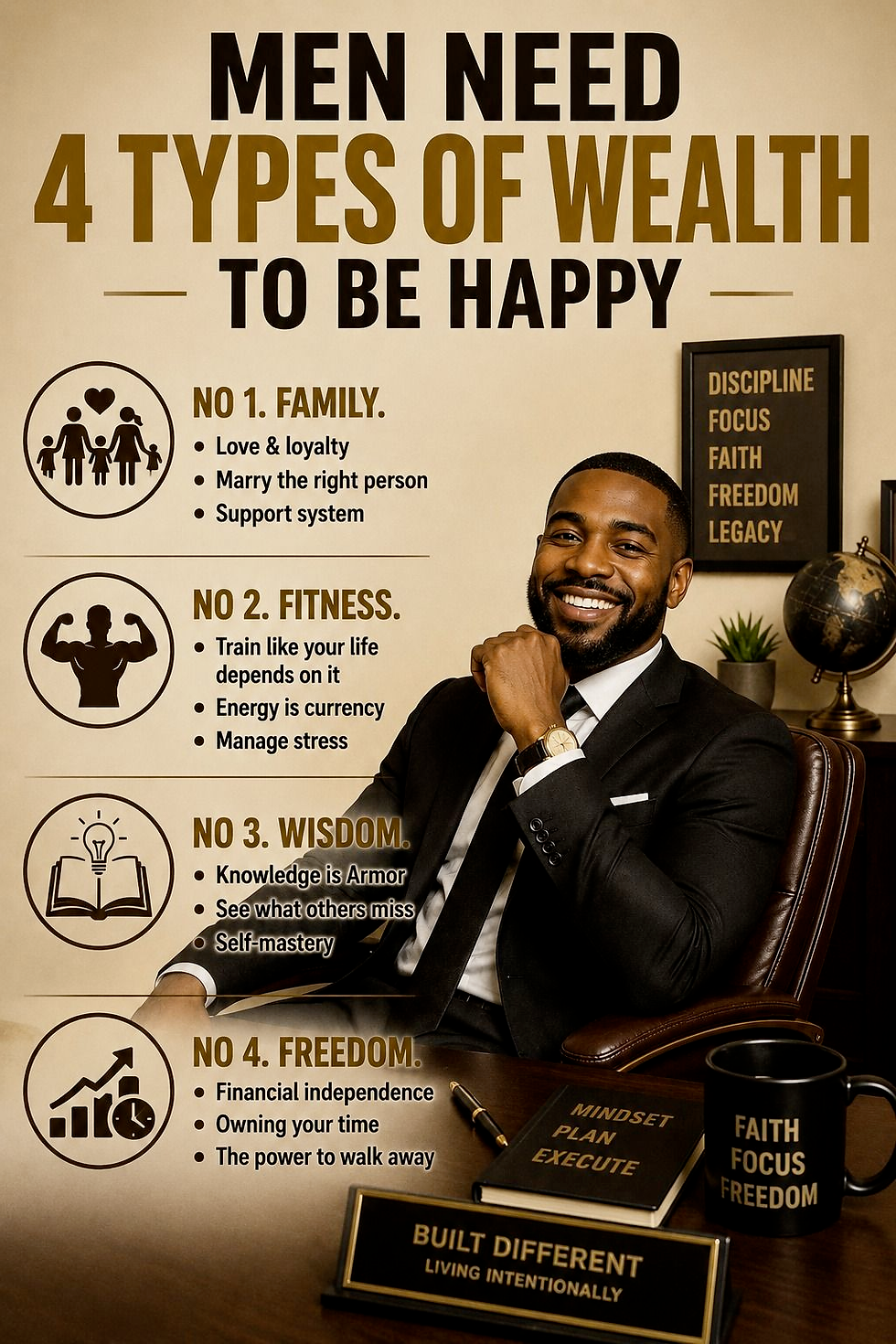
The truth is that too many men are carrying financial pressure in silence while trying to maintain the appearance of stability, success and control.
BrothaTalk exists to create honest conversations around leadership, money, identity, wellbeing, legacy and the realities many men are navigating behind closed doors.
If this post challenged your thinking, sparked reflection or made you reconsider your own financial habits, then do not process it alone.
Join the BrothaTalk conversation and connect with a community focused on growth, accountability, ownership and building stronger futures for ourselves and the next generation.
Real wealth is not only about what you earn. It is about what you build, what you protect and what you leave behind. Be part of a movement committed to breaking survival cycles and creating lasting legacy.


Comments