
The Leadership Menopause Blind Spot
- Sonia Brown MBE

- Jun 9
- 6 min read
What If We have Been Asking the Wrong Question About Menopause?
For years, the conversation around menopause has centred on symptoms. We have debated hot flushes, hormone replacement therapy (HRT), sleep disruption and brain fog, all of which deserve attention. Yet by focusing almost exclusively on biology, we may have overlooked a much bigger question.
What if we have spent decades treating menopause as a women's health issue when it is also one of the greatest leadership, productivity and economic challenges hiding in plain sight?
This matters because the world of work has changed.
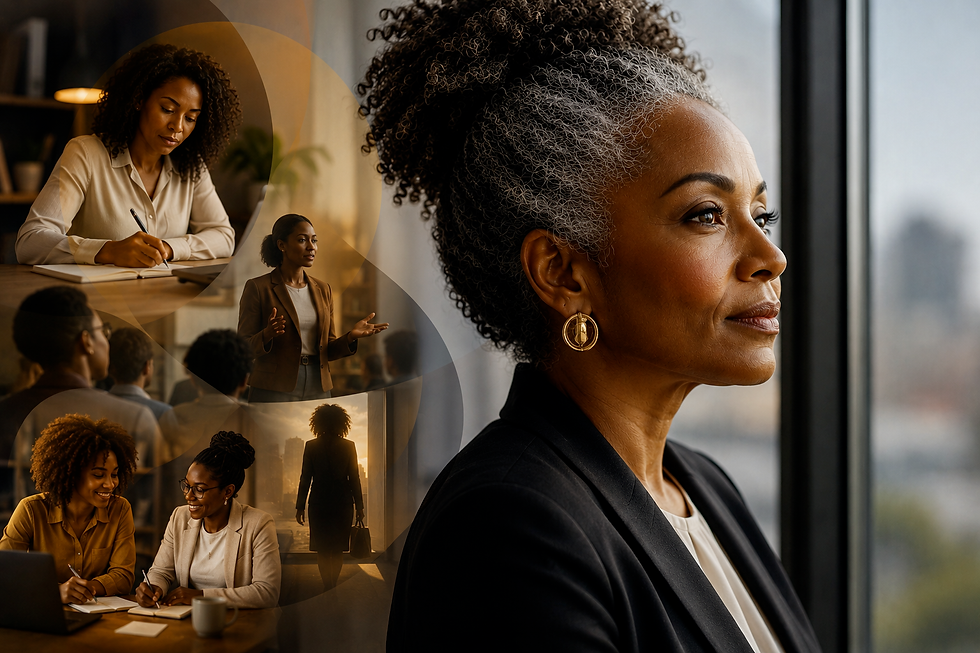
Women are working longer, launching businesses later in life, serving on boards, leading organisations and mentoring the next generation well into their fifties and sixties. Many are reaching the height of their professional influence at precisely the same time they begin navigating perimenopause and menopause. This is no longer a niche health conversation. It is a leadership, economic and societal challenge that affects how we retain talent, support entrepreneurs, value experience and build more inclusive workplaces and communities.
For more than twenty-five years, the NBWN has supported thousands of women as they have built businesses, progressed into leadership, rebuilt careers after redundancy, balanced caring responsibilities and navigated significant life transitions. One pattern has consistently emerged. Just as many women reach the point where their judgement, confidence and influence should be at their greatest, menopause arrives, yet the systems designed to support them are often least prepared to respond.
When women leave leadership because of unsupported menopause, we do not simply lose employees. We lose mentors, innovators, entrepreneurs, role models and decades of accumulated wisdom. That loss extends far beyond individual careers. It weakens organisations, slows economic growth and deprives future generations of experienced women whose knowledge cannot easily be replaced.
The Symptoms Are Not the Whole Story
Research increasingly shows that women from African, Caribbean, South Asian and other ethnically diverse communities often experience menopause differently. For many, symptoms may begin earlier, last longer or have a greater impact on daily life than has traditionally been recognised. These findings reinforce what women have been saying for years. Menopause is not a one-size-fits-all experience.
Symptoms rarely occur in isolation. Poor sleep affects concentration. Brain fog can undermine confidence. Anxiety influences decision-making, while fatigue impacts leadership, relationships and business performance. For women responsible for managing teams, growing organisations, caring for families or running their own businesses, these challenges affect far more than individual wellbeing. They influence productivity, financial security and long-term career progression.
The question is no longer whether menopause affects women's health. It is whether our healthcare systems, workplaces and enterprise support organisations are prepared to retain and support the women whose experience has never been more valuable.
When Biology Meets Culture
Health never exists in isolation. Long before menopause begins, many women have spent decades balancing professional ambition with family responsibility while navigating expectations about strength, sacrifice and resilience.
Within many African, Caribbean, Asian and other culturally diverse communities, women are often expected to be the carers, the problem-solvers and the emotional anchors of their families. Conversations about menopause have historically remained private, leaving many women to believe they simply have to endure the transition in silence.
For women who have also experienced racism, workplace bias or the pressure to continually prove themselves, chronic stress becomes another layer influencing health and wellbeing. Researchers continue to explore the relationship between long-term stress, hormonal regulation and health outcomes, making it increasingly clear that menopause cannot be separated from the social, cultural and economic realities in which women live and work.
Breaking these long-standing patterns begins with conversation. When mothers speak openly with daughters, colleagues support one another and communities normalise discussions about menopause, they replace stigma with understanding and isolation with connection.
The Cost of Carrying So Much
One of the least understood aspects of menopause is not simply the physical symptoms but the invisible mental and emotional load women carry into midlife.
By this stage, many are leading organisations, running businesses, supporting children through education, caring for ageing relatives and making financial decisions that affect entire households. Women entrepreneurs face additional pressures. There is often no HR department, no occupational health support and no one to step into a client meeting or manage operations when symptoms become overwhelming. The success of the business frequently depends on one person continuing to perform regardless of how they feel.
Hormonal change can increase vulnerability to anxiety, low mood and reduced confidence, while persistent sleep disruption affects concentration, decision-making and resilience. The issue is not that women become less capable. The issue is that too many continue carrying extraordinary responsibilities without the support systems needed to help them succeed.
Why Organisations Cannot Afford to Ignore Menopause
Menopause is no longer simply a wellbeing conversation. It is a workforce, leadership and economic conversation.
Experienced women represent decades of knowledge, leadership and professional expertise. Research from the Fawcett Society and the CIPD continues to show that menopause affects confidence, attendance, productivity and career progression. Many women still feel unable to discuss symptoms because they fear being viewed as less capable, less committed or less suited to leadership.
The same principle applies to entrepreneurship. Women-led businesses contribute significantly to innovation, employment and economic growth, yet founders rarely have access to the structured support available in larger organisations. If we are serious about increasing female entrepreneurship and closing the gender wealth gap, menopause must become part of the conversation about sustainable business growth, leadership development and inclusive economic policy.
Supporting women through menopause is not simply the right thing to do. It is a strategic investment in retaining talent, strengthening businesses and protecting the experience our economy depends upon.
The Healthcare Gap We Can No Longer Ignore
Many women describe remarkably similar experiences. They seek help only to be told they are too young, too stressed or simply experiencing the natural process of ageing.
While awareness has improved significantly, access to knowledgeable and culturally competent menopause care remains inconsistent. Too many women continue to struggle to access timely diagnosis, evidence-based information and treatment options that reflect their individual circumstances.
Improving outcomes requires more than increasing awareness. It requires research that better reflects diverse populations, continued professional education and healthcare systems that recognise women's lived experiences without requiring them to fight to be believed.
Why This Matters to the Next Generation

Menopause is not only shaping today's workforce. It is influencing tomorrow's leadership pipeline.
Every time an experienced woman steps back from leadership because she feels unsupported, the next generation loses a mentor. Every entrepreneur who quietly scales back or closes her business because unmanaged symptoms become impossible to balance with the demands of leadership represents lost innovation, employment and opportunity.
Every senior professional who leaves before she is ready takes with her years of expertise that cannot simply be replaced.
Supporting women through menopause is therefore not simply an investment in individual wellbeing. It is an investment in stronger businesses, more resilient communities and future generations of leaders who will benefit from the knowledge, guidance and experience of those who came before them.
From Awareness to Action
Real progress requires action from every part of society.
Healthcare providers must continue improving culturally competent menopause care while ensuring research reflects the diversity of women's experiences. Employers need to recognise menopause as both a wellbeing and business priority by educating managers, creating psychologically safe workplaces and retaining experienced women whose expertise strengthens organisations.
Enterprise agencies, investors and business support networks must also recognise that entrepreneurs experience menopause differently from employees and ensure that health, leadership and business growth are considered together rather than as separate conversations.
Community organisations have an equally important role to play by creating trusted spaces where women can learn, share experiences and challenge longstanding stigma. Every woman deserves access to evidence-based information that empowers her to advocate confidently for her own health, ask informed questions and seek support without apology.
Menopause is not the end of ambition, influence or leadership. It arrives at a point when many women possess their greatest wisdom, strongest professional networks and deepest experience.
Perhaps the real measure of an inclusive society is not how well it supports women at the beginning of their careers, but how well it values them at the height of their experience.
When we answer that question honestly, we move beyond awareness. We begin building healthcare systems that listen, workplaces that retain talent, enterprise ecosystems that support women founders and communities that recognise experience as one of our greatest assets.
Join the Conversation
Like, comment and share. How can healthcare providers, employers, policymakers and enterprise organisations work together to ensure that menopause no longer becomes a barrier to leadership, entrepreneurship or economic participation? Your perspective could help shape a future where every woman is supported to thrive through midlife and beyond.


Comments